Notes on The Five Wounds
Muhurat: why Indian families wait for an auspicious hour
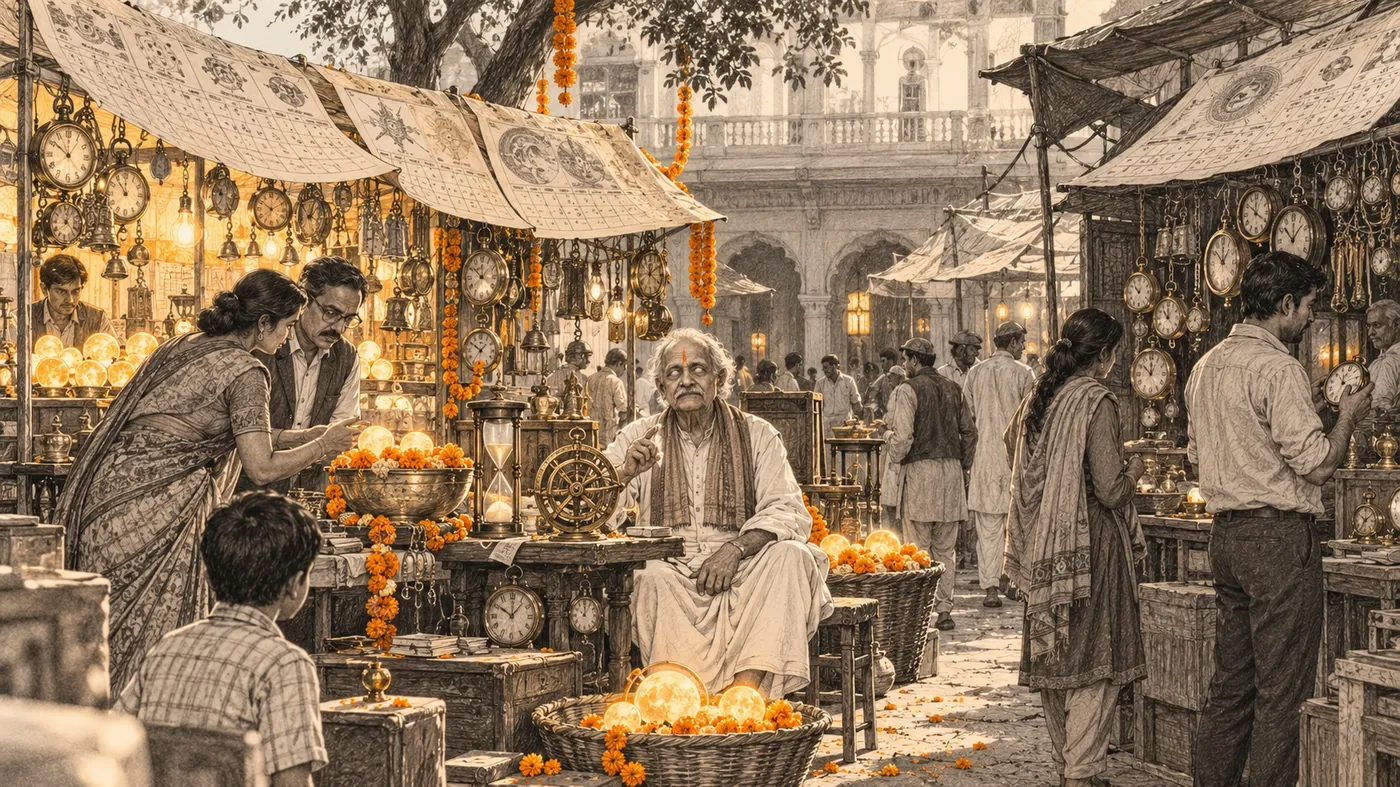
A muhurat (muhurta in Sanskrit) is two things at once: a unit of time, one thirtieth of a day and night, or forty eight minutes, and a moment judged to be good for beginning something. Across India, families still ask for a muhurat before a wedding, a housewarming, the opening of a shop or the first day of a journey.
Forty eight minutes
The old texts divide a full day and night into thirty muhurtas of forty eight minutes each. The word is often read as joining muhu, a moment, and rta, order. Each muhurta is divided again into thirty kalas, and each kala into thirty kashthas of about three seconds.
One muhurta is known far beyond astrology: brahma muhurta, which begins about one hour and thirty six minutes before sunrise and has long been kept for prayer, study, yoga and meditation.
Reading the almanac
To find a good hour for a particular event, families turn to the panchang, the Hindu almanac. Its name means "five limbs", for the five things it tracks each day: the lunar day (tithi), the weekday (vara), the star the moon is in (nakshatra), and two further measures called yoga and karana. A priest or an almanac reads these together and names a window of time.
For everyday decisions many households use a simpler table, the choghadiya. It cuts the daytime, sunrise to sunset, into eight equal parts, and the night into eight more, each about an hour and a half. Amrit, Shubh and Labh are the most auspicious of them, Chal is good, and Udveg, Kaal and Rog are avoided.
Why weddings have a season
Muhurat shapes the whole year, not only single days. For four months, from Shayani Ekadashi in the monsoon to Prabodhini Ekadashi in the month of Kartika, Vishnu is believed to sleep. This is Chaturmas, and marriages are traditionally not held in it. Prabodhini Ekadashi, when Vishnu wakes and Tulsi Vivah is celebrated, opens the Hindu wedding season, which is why so many weddings crowd into the weeks that follow.
Living by the almanac
For some families a muhurat is a blessing asked for once or twice in a lifetime. For others the almanac sets the rhythm of every decision: which day to sign, which day to travel, even the day a child may be born. Whatever one believes about the stars, the practice says something true about people: it is easier to begin a hard thing when you have been told the time is right.
Muhurat in The Five Wounds
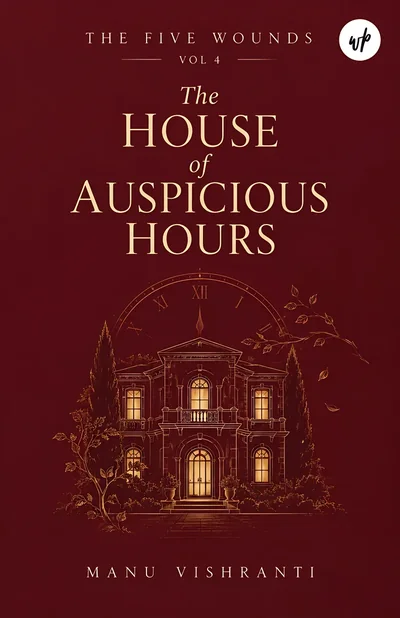
The House of Auspicious Hours, Book Four, is set in a house that lives this way:
In the Malhotra house, time is a bazaar. Three generations have bought their whole lives in the sanctioned hours of one family almanac: marriages, businesses, the day a child may be born.
The book does not ask whether fate is real. In its own words, it asks "what a family is using it to hold up, and what falls when you take it away."
Quick answers
What is a muhurat?
A muhurat (muhurta) is a unit of time equal to one thirtieth of a day and night, forty eight minutes, and also a moment judged auspicious for beginning something such as a wedding, a housewarming or a business.
How long is one muhurta?
Forty eight minutes. There are thirty muhurtas in a full day and night.
What is brahma muhurta?
The muhurta that begins about one hour and thirty six minutes before sunrise, traditionally kept for prayer, study and meditation.
What is choghadiya?
A way of dividing daytime and night into eight parts each, about an hour and a half long. Amrit, Shubh and Labh are the most auspicious, Chal is good, and Udveg, Kaal and Rog are avoided.
Why are there no Hindu weddings during Chaturmas?
Chaturmas is the four months from Shayani Ekadashi to Prabodhini Ekadashi when Vishnu is believed to sleep. Marriages are traditionally avoided in it, and the wedding season begins when it ends.